Scalability
One of the more interesting - and controversial - changes with the 8.0 BfA Warcraft patch has been the further introduction of level scaling. It was already around before the patch, but it now seems to be universal. Which has had a huge impact on the speed of levelling.
For the longest time people have complained about out-levelling content so that they feel they can’t effectively finish storylines because the XP reward is basically zero. Not that that meant you couldn’t do the content, just that it felt like you were wasting time - it’s a strange mental trick. So Blizzard have introduced scaling across all continents and content, effectively splitting it into Vanilla / Burning Crusade + WotLK / Pandaria + Cataclysm / Warlords / Legion / BfA.
You can now level in any zone within those brackets, and the mobs and rewards will scale accordingly. This is pretty great in many ways, as those that enjoy the storylines can experience the entire thing. You can jump to a zone you haven’t played and everything will be a gentle challenge and you’ll get gear upgrades as you travel.
It’s a boon for the Alliance levelling we’re doing, making each zone relevant and interesting. The main disadvantage is all the old speed levelling techniques have dried up. I’m interested in levelling an Allied race - Highmountain Tauren, naturally - so started investigating how best to do it.
The received wisdom seems to be that there are basically no shortcuts any more. The old favourite of chain running dungeons appears to be off the cards, as the time invested in the run is often better served just doing simple questing. When we started running the low level Alliance dungeons, I assumed everyone would be gaining two or three levels per run, meaning we’d have trouble completing them all. But the scaling has meant that people are lucky to level even once, and all the dungeons are available until level 60. Pretty great, and very clever.
Some claim that carrying through dungeons with a high level friend (or second account) is still an option, running Stormwind Stockades from 1-60(!), but that is terminally dull. Some redditors seem to think that there’s a pet battle loophole, but that too sounds super dull. I want to level fastish, but I don’t want to just do the same thing over, and over, and over.
So in the end, it seems that the simple act of gearing your character up with heirlooms, taking mining and herbing, and setting out into the world is the best method. Which is probably as it should be, and I’m merrily making my way through the Barrens once again as a result, and enjoying every moment.
Classy
Soul of the Forest posted an interesting question: what class do you refuse to play?
Their bette noir is melee DPS, which is a very reasonable position to take. Staying alive is the key difference in playing and contributing well and being a dead weight, and melee DPS is always bottom of the heal priority whilst being in the most danger of death. I stopped raiding on my Rogue because I used to die too much too easily, but I’ll still play melee DPS as long as I’m wearing plate or have some good self heals.
Armagon and Endalia responded, with tanking being the main thing they avoid (largely due to the pressure from other players), and I’m sure there are more thoughts out there too.
I’m quite happy playing tanks of all descriptions, and love playing a Hunter obviously. I haven’t played a lot of healers in an MMO, but in Overwatch I love playing Mercy.
The class or role I just can’t bring myself to play is a caster. Something about using magic just doesn’t gel with me, and I can’t find a way to make it work. Despite casters being essentially a Hunter with lightning or flame instead of arrows and bullets, they don’t work for me. The same fear of magic applies in tabletop RPGs like DnD, some of which is down to the overwhelming spell tables, but it’s also just not a class I can roleplay at all. It somehow seems too passive, or that it’s not me doing the work, it’s the magic.
So I guess my characters have to have some element of physicality to them, something with heft or guile or a pet and a bow. I’ll leave the weaving of magic to the experts.
The WoW Diary
Blizzard Watch has posted about an interesting sounding project - a development diary about the very early days of the creation of WoW.
It’s being written by John Staats, who was apparently one of the key designers of a slew of early dungeons and content, including Karazhan, Wailing Caverns, and much more. There’s a good extract of the book over on Wowhead that details some of the work on Scholomance. In the early days apparently it could take 6 hours(!) to finish a single run - and this is a 5 man dungeon, not a raid.
It’s fascinating to read how Staats wanted to change the mob density in the dungeon as a result, but Jeff Kaplan (at the time the ‘endgame designer’ for WoW) pushed back as doing that may have had unintended consequences on the world economy. The less mobs, the less loot, and also the less crafting drops:
The next morning, I went back to Jeff’s office, to tell him again about the length. Ever patient, he explained that it wasn’t simply a matter of removing spawns, there might be quests that depended a number of drops and removing monsters might unbalanced quests. [Kaplan] explained that there were also trade skill recipes that used ingredients from loot tables - so reducing monsters could also affect the trade skill economy. “There’s lots of systems connected to monsters, and we also could be introducing bugs into the game by changing things.”
It’s very much an insider account, and he’s not hiding the politics and tensions of working on a high pressure development, which is unusual for this kind of book. Apparently it’s a fully Blizzard approved project, so it must be (mostly) accurate.
There’s a fair amount of ego on display in that Wowhead excerpt, but we can probably forgive that if the content is strong enough. There’s a Kickstarter to fund the book starting August 28 (which is now, here in Australia!). I’ll update this post with a real link once it’s live, in the meantime here’s a beta link to whet your appetite.
Update: Here’s the live Kickstarter - funded almost immediately.
Looking good
One of the questions I had when pondering the rare mob collection project was how to improve the quality of the screenshots - pictures or it didn’t happen, after all.
After a bit of hunting around, I found that there a few console only settings in Warcraft related to the screenshot quality. If you type these commands in the chat window and press enter, they are changed permanently everywhere. (You don’t get any feedback that anything happened, but it does work.)
The first is choosing between JPG (the default) and TGA. TGA is a lossless format, so the image quality is higher and non compressed, but it is a fairly arcane format - you’d want to convert it to something more useful like PNG to use it on Wordpress et al. In any case, the command to change it to TGA is:
/console screenshotFormat tga
And to switch back to JPG:
/console screenshotFormat jpg
Sticking with JPG is more convenient, but the default quality is pretty average. The good news is there’s another console setting that bumps up the JPG quality until it’s barely different from the TGA files (confirmed by much internet commentary). Wowheads screenshot submission guidelines state the default JPG level is 3, but we can bump it all the way up to eleven 10:
/console screenshotQuality 10
I tried this and while the difference is noticeable if you look closely, it’s not as huge as you might expect. One byproduct is the filesize grows from about 500KB to 2MB, but with some judicious resizing the filesize gets more reasonable. So it seems changing the quality setting is not quite enough. Which means learning more about doing some post processing on them.
There are some great photography-inspired tips in this excellent article on Blizzard Watch which seems a good place to start. Aside from the framing tips, the main advice seems to be about adjusting colours and contrast, to get the details to really pop and sparkle. The main problem I see is that the screenshots are too dark, so I played around with an image of our second RFC run to see what could be done. Here’s the default shot:
The heavy contrast is quite nice, but it does tend to hide much of the detail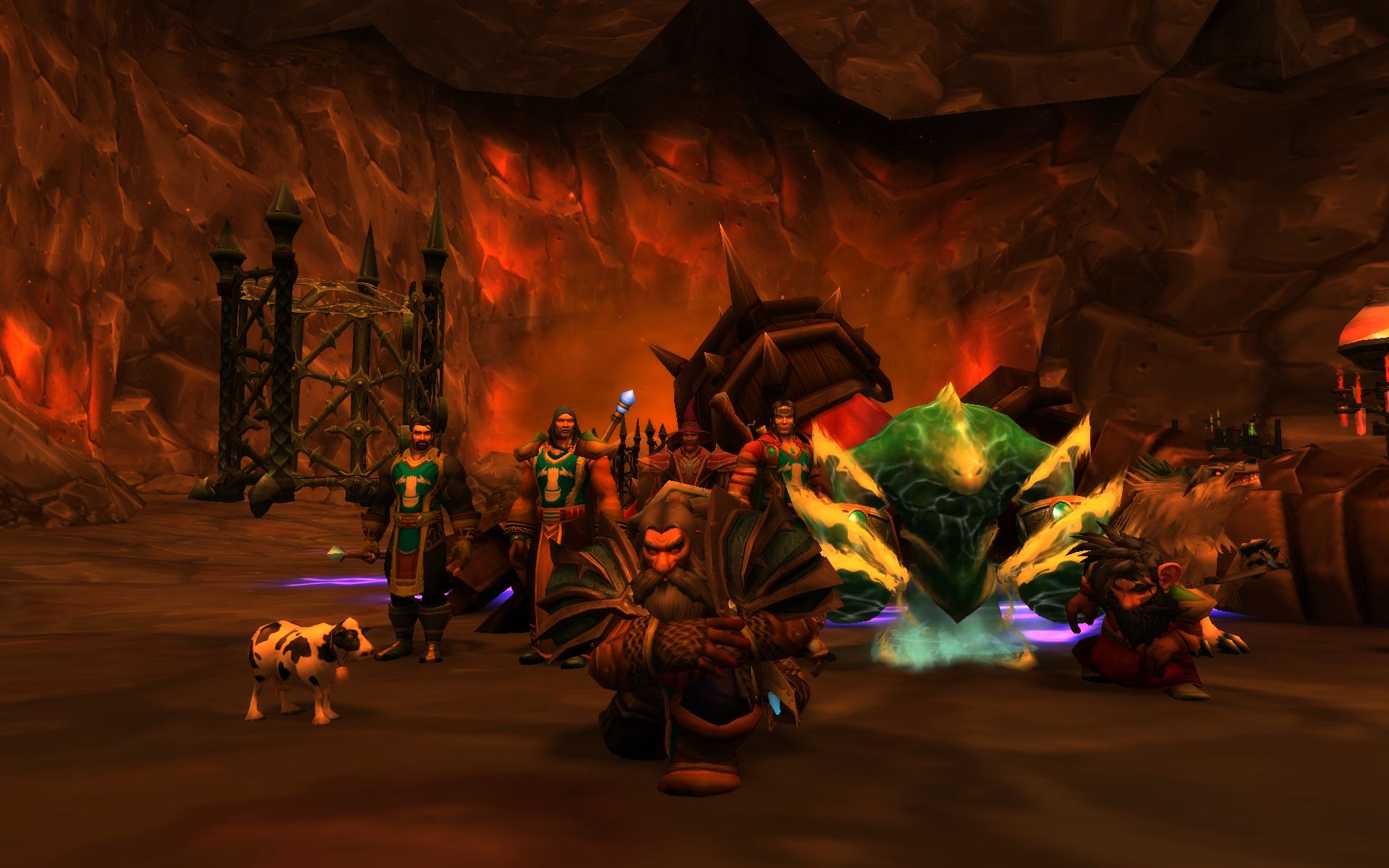
Using Irfanview (which admittedly is more of a viewer than an editor), I mucked around with adjusting contrast and saturation, but in the end found that the ‘auto adjust colours’ setting did a pretty good job:
Deatils are much clearer, at the cost of some depth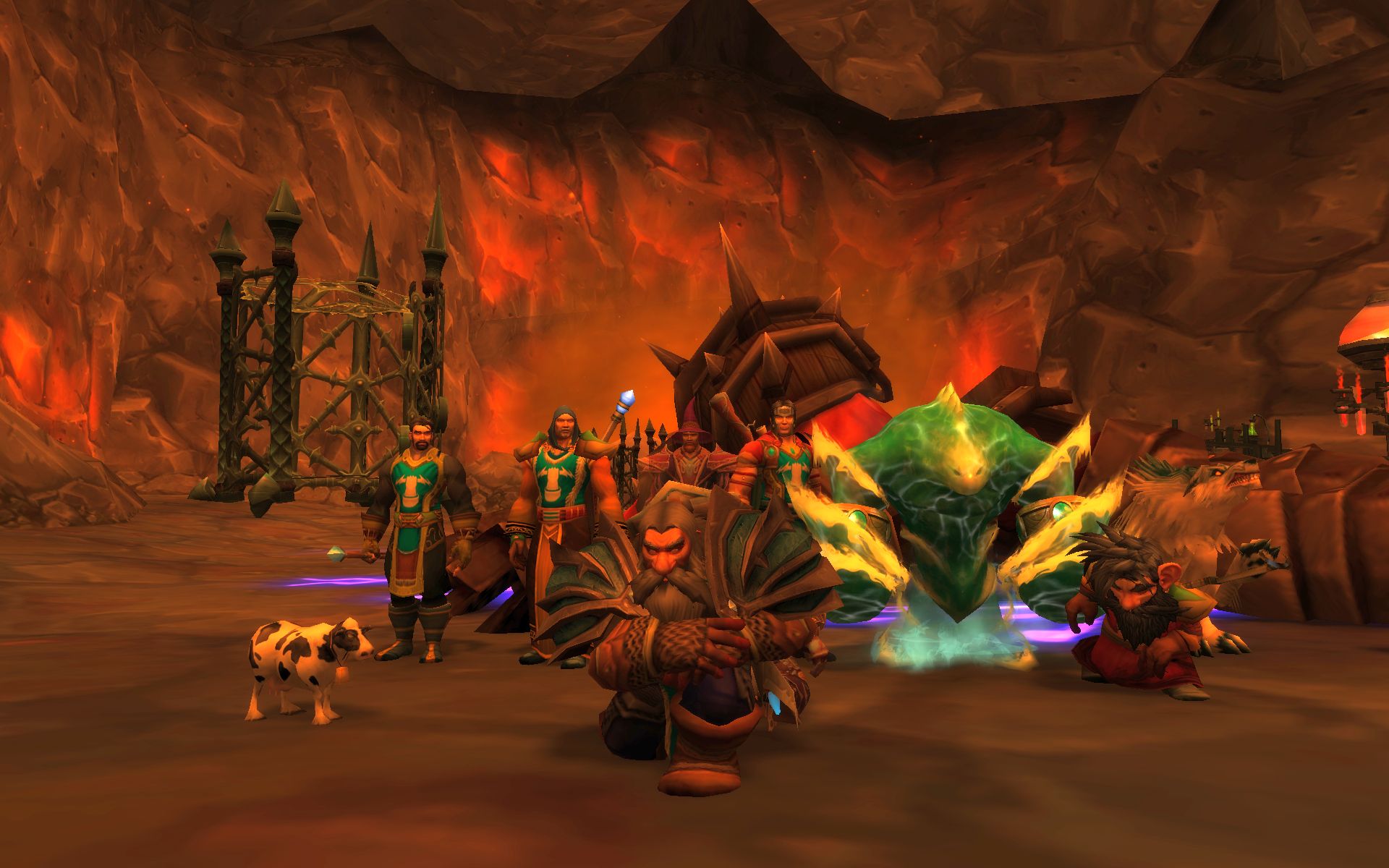
Finally I used the ‘sharpness’ setting to see what that would do:
Things like belts, tabard edges, and moustaches(!) are picked out, though there is some jagged edging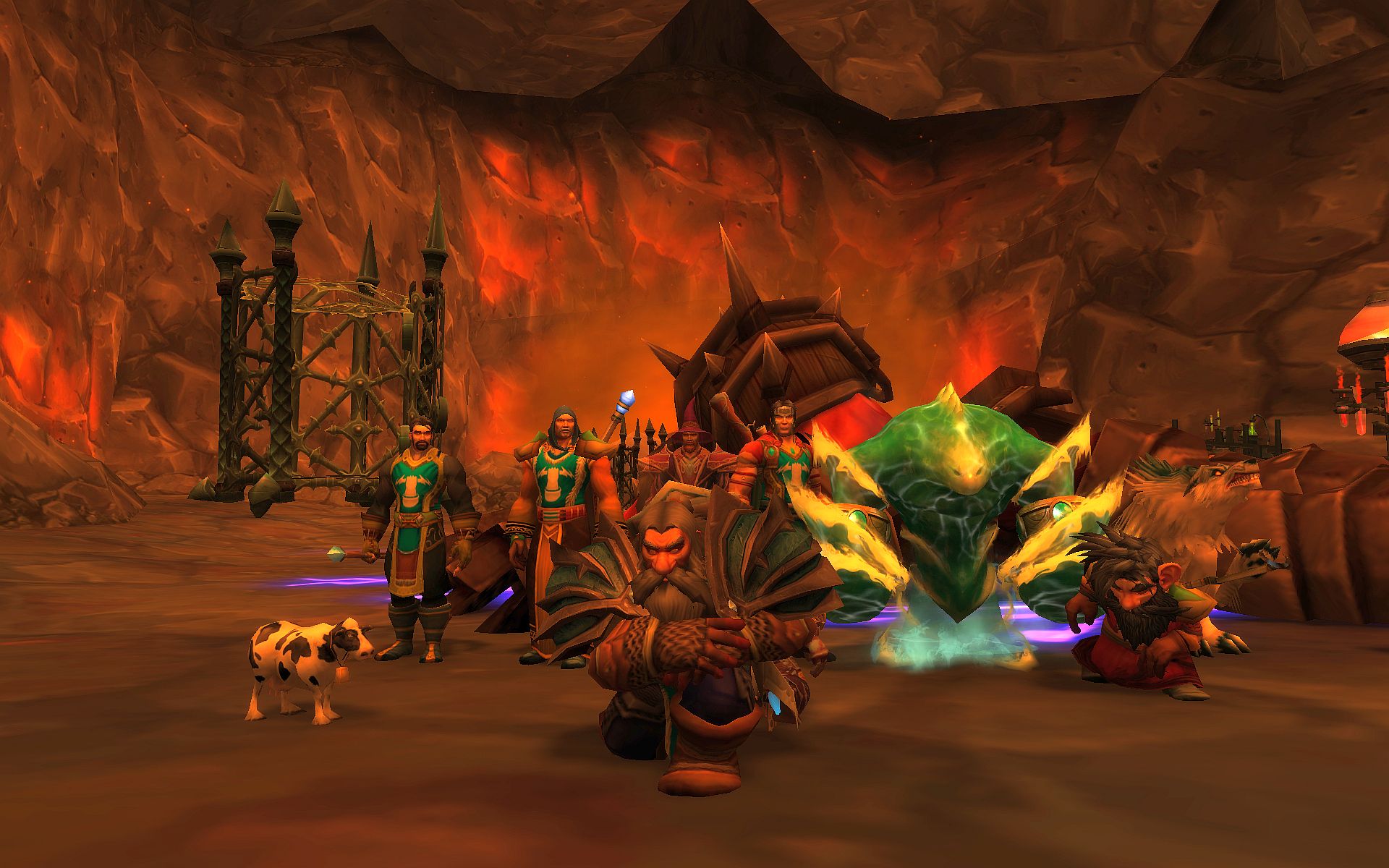
Hm. I like that you can see more once it’s adjusted, but it does wash it out a fair bit. I guess using the default settings isn’t a great plan - more to learn and more experimenting to come. Either that or I should just start taking screenshots in daylight…
Why we watch
Mailvaltar has an interesting post about why we sometimes prefer to watch rather than play a game. Having a love/hate relationship with Overwatch means that they prefer to watch the game instead of the stress of the pressure to perform when playing. I can totally understand that tension - Overwatch is a sure fire stress machine if you’re having a bad run.
I watched some of the Overwatch League and enjoyed it, but I did find there was a fair bit of assumed knowledge and often not enough time to unravel what just happened. Often a critical play would happen off camera, just because the maps aren’t compressed into a single camera zone. And I’d pretty quickly start thinking I should be playing rather than watching. That’s not a feeling I get watching live sports, for example, because you can’t just stop watching and go play a quick game of rugby or basketball. With gaming you obviously can.
The time investment required to watch something is probably where I balk, especially when compared to reading. A live of recorded video requires full attention and doesn’t allow much time shifting, or doing something else simultaneously. Whereas I love reading about games, especially on blogs where you get a personal take on something rather than the often banal professional feed. Mailvaltar’s example of TAGNs Eve posts is a great example - I don’t play, and likely never will, but still enjoy reading about it immensely.
I’ll also check in on Polygon and Kotaku regularly for the industry side of things. And I very happily subscribed to the printed version of Edge magazine, which is a superb publication that has somehow managed to retain incredibly high production values in this age of the near death of the newsagent.
Mailvaltar closes with this observation, which is spot on:
For a long time I couldn’t quite come to terms with the fact that enjoying a game doesn’t necessarily require to actually play it.
I feel the same way, though I still get itchy hands reading the great Blaugust blogs about SWtOR, GW2, DDO, LotRO, etc, let alone all the incoming games on the horizon. The good news is someone out there will write about it, and it will become their passion, and we’ll get the benefit of them sharing that passion, even if we can’t play them all. Thanks in advance!